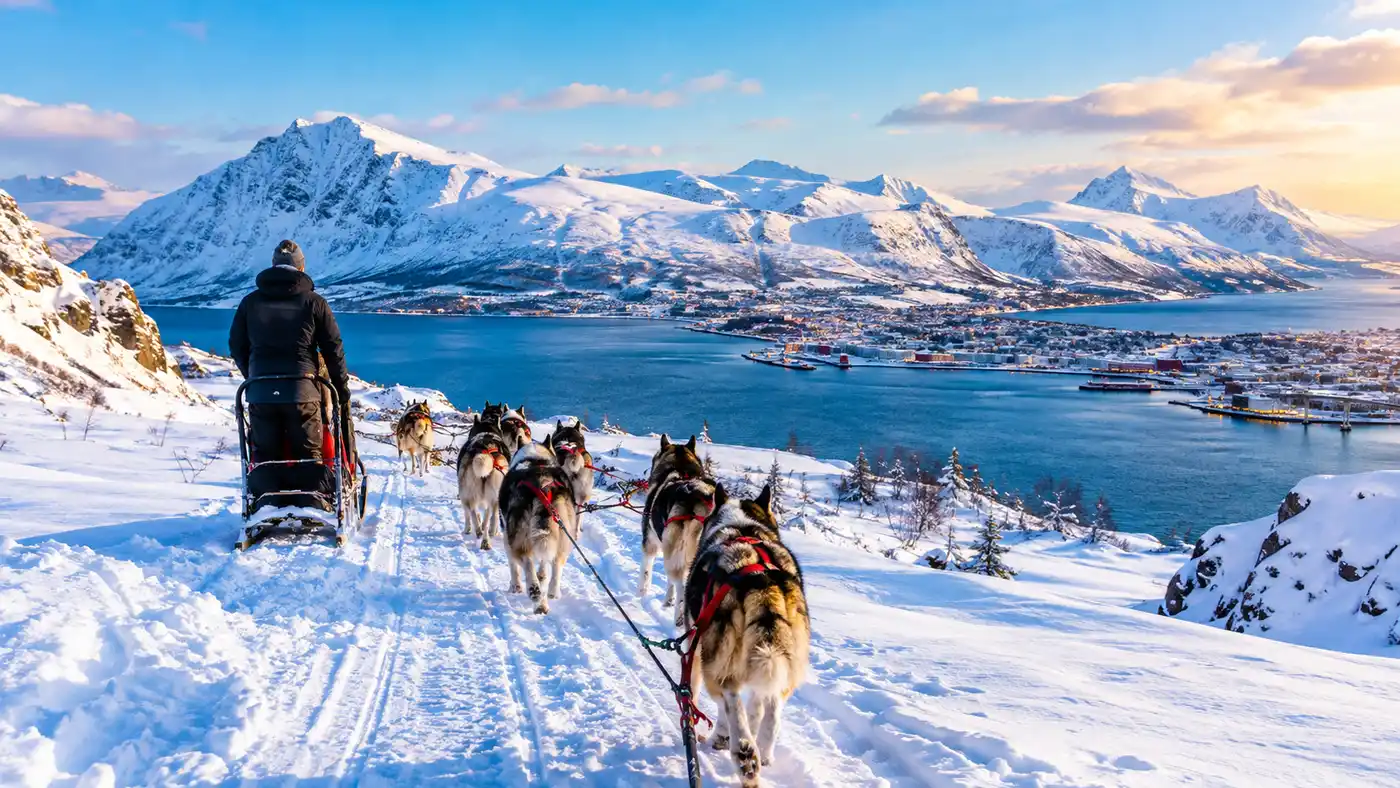
Tromso Dog Sledding Season: Month-by-Month Guide
Most people picture deep powder and blue twilight when they book an Arctic trip. If you are eyeing dog sledding tromso november packages, though, you are stepping right into the Arctic's greatest transitional gamble. The snow might arrive on November 4, burying the birch forests under 30 centimeters of fresh powder. Or it might rain until the 26th, leaving the coastal valleys bare while inland plateaus freeze solid.
I have stood at a kennel outside the city watching huskies pace their runs with pure nervous energy because the temperature was hovering at 1°C. Dog sledding in northern Norway runs from late autumn carts through to late-April sun crust, yet every single month feels like a distinct season. Here is what actually happens on the trails month by month, without the glossy brochure fluff.
Book your dog sledding tromso experience:
Autumn Trails: Tromso Dog Sledding October and Early Season Shifts
October surprises people. Autumn arrives violently in northern Norway. The golden leaves on the mountain birches usually drop by the first week of the month, stripped clean by coastal gales. Snow creeps down the peaks of the Lyngen Alps, dusting the summits above 800 meters, but the valley floors remain stubbornly green and brown. If you book self-drive husky tours in Tromso or passenger runs during this window, you are running on wheeled rigs.
Taking part in dog sledding on wheels tromso style is genuinely wild. The dogs spend the summer resting and molting, so October is when mushers begin building their team endurance for winter. These wheeled carts look like heavy-duty, three-wheeled or four-wheeled metal buggies equipped with hydraulic disc brakes. You sit low to the ground. The scent of damp moss, wet gravel, and cold pine hits your face at 25 kilometers per hour. It is loud, bumpy, and remarkably fast.
Note: Autumn cart tours rely entirely on dirt roads and gravel tracks. If early rain turns the trails into deep mud, tours occasionally get rerouted onto gravel farm roads to protect the dogs' paws.
Temperatures during Tromso dog sledding october excursions hover between 1°C and 7°C. That sounds mild to anyone who expects Arctic freezes, but damp coastal air cuts right through heavy denim. Kennels provide windproof suits for a reason. The dogs prefer these crisp autumn runs because anything warmer than 10°C causes them to overheat within minutes.
- Trail surface: packed gravel tracks, dirt forestry roads, occasional slick mud patches.
- Typical daytime light: roughly 8 to 10 hours of clear daylight, fading fast by late afternoon.
- Dog temperament: wild excitement, high energy after months of summer lounging.
- Clothing need: windproof shell, water-resistant gloves, sturdy hiking boots rather than winter boots.
The Big Transition: Dog Sledding Tromso November Realities
November is the month of weather roulette. Everyone asks whether tromso dog sledding november departures run on snow or wheels. The truthful answer is: it depends entirely on the valley. Coastal Tromso stays warmed by the Gulf Stream, which means sea-level terrain often sits at freezing point without accumulating snow. Head 45 minutes inland toward the Tamok Valley or Breivikeidet, and you find a completely different world where cold air sinks between jagged peaks and freezes hard.
During dog sledding tromso november journeys, the transition from carts to traditional wooden sleds usually happens mid-month. Some seasons, mushers run sleds by November 10. In 2018, runners were not out on thick snow until early December. Kennels adapt by moving dogs to higher inland base camps where ground frost holds whatever snow falls. Sledding on that thin early snow has a sharp, scraping soundtrack. You feel every bump beneath the wooden runners, and the mushers steer conservatively to protect their sled bases from hidden rocks.
Pro tip: If you book for mid-November, pick an operator based inland in the Tamok Valley rather than on the coast, as their base camp is roughly 400 meters higher and gets snow weeks before the city.
The light changes dramatically in November. The sun dips below the horizon in late November, beginning the polar night. Before the dark sets in, you get this endless, golden dusk that stretches out for 3 hours. Running a dog team through that lingering mauve light feels unreal. The dogs quiet down once they fall into a steady rhythm, their breath puffing out in rhythmic clouds against the purple sky.
Deep Winter: Dog Sledding Tromso December and the Polar Night
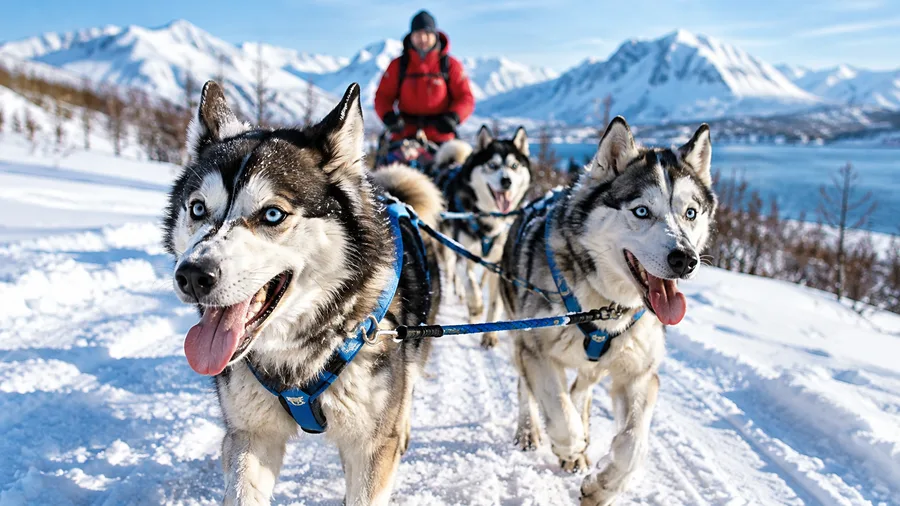
December brings the true Arctic fairy tale, but it comes with pitch darkness. From late November until mid-January, the sun never clears the horizon. You do not get total pitch-black conditions in the middle of the day, though. Between 10:30 in the morning and 1:30 in the afternoon, the sky turns a deep indigo and electric blue, reflecting off the white snow. It gives the landscape a moody, cinematic glow that makes photography fascinating.
Booking dog sledding tromso december trips means preparing for proper sub-zero cold. Temperatures in the inland valleys regularly plummet to -18°C. At that temperature, moisture from your breath freezes your eyelashes together, and phone batteries die within 12 minutes. The huskies love it. This is their optimal working climate, and they run with effortless power. You stand on the runners, holding the handlebar with both mittens, shifting your weight as the wooden sled flexes over hard-packed drifts.
Night runs become popular now. Pairing the trail with northern lights dog sledding in Tromso gives you a shot at seeing the aurora dancing above frozen rivers while the pack leads the way. Tour prices jump significantly between December 20 and January 3 due to holiday crowds, so reservations made less than 6 weeks out usually face sold-out calendars.
| Month | Surface | Daylight Character | Average Temp | Booking Demand |
|---|---|---|---|---|
| October | Wheeled carts | Normal daylight (8-10 hrs) | 2°C to 7°C | Moderate |
| November | Carts or early snow | Twilight transition (3-5 hrs) | -4°C to 2°C | High |
| December | Packed snow sledding | Polar night, blue hour (3 hrs) | -12°C to -3°C | Very Peak |
| January | Deep powder, packed trails | Twilight returning to sun (2-4 hrs) | -15°C to -4°C | High |
| February | Firm, deep winter snow | Clear daylight (6-8 hrs) | -10°C to -2°C | High |
| March | Hard-packed trail crust | Long bright days (11-13 hrs) | -6°C to 1°C | Moderate-High |
| April | Spring crust, soft afternoon | Prolonged daylight (14-16 hrs) | -2°C to 4°C | Moderate |
Book your dog sledding tromso experience:
Midwinter into Spring: January Through April
January tests your tolerance for freezing conditions. It is frequently the coldest stretch of winter. Yet, around January 15, the sun peeks over the southern mountains for the first time in nearly 2 months. Locals celebrate the day with doughnuts and outdoor gatherings. Out on the sled, that first glimpse of direct sunlight catching the tips of snowy peaks is unforgettable. Snow conditions are reliable everywhere, from the coast straight up into Sweden's border passes.
February and March are honestly the sweet spot for pure sledding joy. Snow bases reach their maximum depth, often well over 1.5 meters in the valleys. The trails are groomed hard by repeated sled passes, making them fast and predictable. Daylight returns in full force, giving you 7 to 11 hours of sunlight. You get the Arctic winter chill without losing your entire afternoon to pitch darkness.
April shifts the dynamic into spring touring. The days stretch out past 14 hours. Morning trails are rock-hard from overnight freezing, providing incredible speed, while afternoon sun softens the top layer into sugary spring snow. Mushers break out sunglasses instead of goggles. You can comfortably ride without three layers of wool under your suit, and the huskies lounge happily on warm wood chips between runs.
Choosing Your Month: Practical Timing Considerations
Picking the right date comes down to what trade-offs you want to make. Many travelers focus purely on snow quality, but daylight and crowds matter just as much when you are out in the wilderness.
- Early-season budget travelers: October and early November offer lower tour costs and far fewer crowds, though you must accept running on carts instead of snow.
- Atmosphere and aurora chasers: December and January maximize darkness, giving you the best odds of running under the northern lights during regular tour hours.
- Photography and landscape lovers: February and March provide the ideal balance between solid snow coverage and dramatic, long daylight hours for mountain views.
- Warmth and active mushing: Late March and April mean comfortable temperatures, firm morning trails, and plenty of light for longer backcountry expeditions.
Whatever date you pick, do not underestimate the sheer physical effort required if you choose to drive your own team. Mushers do not just stand there like passengers on a snowmobile. When the team hits an uphill incline, you have to pump one foot like you are riding an oversized skateboard, or step off completely and jog behind the sled while holding the handlebar. In deep January cold, that physical exertion warms you up within 3 minutes flat.
Frequently Asked Questions about dog sledding tromso november
Will there definitely be snow for dog sledding in Tromso during November?
Snow is not guaranteed at sea level in Tromso during November. Most commercial sledding takes place inland in colder microclimates like the Tamok Valley, where snow usually settles by mid-month. If snow is delayed, operators swap sleds for wheeled carts.
What happens if I book a sled tour and there is no snow?
Kennels switch to wheeled carts on gravel trails if there is insufficient snow coverage to run sled runners safely. Reputable companies will notify you beforehand, giving you the option to ride the cart or rebook for later dates if available.
Is November too dark for dog sledding?
Not at all. The polar night does not begin until late November, and even after it starts, midday features roughly 3 to 4 hours of luminous dusk known as the blue hour. Evening tours use powerful headlamps that illuminate the dogs and trail clearly.
Can children participate in November dog sledding tours?
Yes, children as young as 4 can join passenger tours where they sit tucked inside reindeer-skin blankets within a sled or cart. Self-drive options generally require participants to be at least 16 years old due to the physical strength needed to brake.
Quick Reference
- Cart season: September to early November
- Snow season: mid-November through late April
- Darkest period: late November to mid-January
- Peak cold: January and early February (-15°C inland)
- Best daylight balance: February through March
Book your dog sledding tromso experience:
The Reality on the Ground
Every week of the Arctic winter brings a slightly different trail under your feet. If you visit in early November, you get the thrilling energy of a team kicking up gravel and charging through biting mountain air. Arrive in February, and you glide through silent, sunlit valleys on runners that hiss over deep drifts. Focus on what you want from the landscape, dress in more wool than you think you need, and let the dogs do what they were born to do.
Read more about dog sledding tromso.